Dream and Delirium on the Kyrgyz Steppe
Part I: Dream
An old Kyrgyz woman turned from the stove, a red-hot spoon steaming in her hand. Before I could flinch, she loomed over me, her calloused hands holding my chin with a vice-like grip, and she pressed the scalding metal to the back of my throat.
I hear my father’s voice echoing in my head, “God grant me the serenity to accept the things I cannot change”.
I wish I could tell you that she was a witch doctor, a hoarder of jars and remedial elixirs promising to restore the HP of weary, wide-eyed travelers. But truthfully, I was too weak to ask. And nor did I care. I was too transfixed by the spectral shapes circling us, fairly certain they were shadows only I could see.
Four days earlier, medical access was the furthest thing from my mind. I was scurrying across Bishkek’s streets with my friend and colleague, Kristi, on the hunt for our 4×4 rental. We had met for the first time in real life just a few days earlier, having planned this insane trip over Slack.
Pixelated camaraderie and a dirt-cheap Pegasus winter sale convinced us that the next logical step was to commit to ten days mostly off-grid in a ‘Stan. What followed were months of deeply philosophical debate between riding skirts and rain pants, seat savers versus padded cycling shorts.
The only sane solution? Bring it all.
You might think you’ve heard this tale before in Kristi’s photo diary — think again. My experience of life in the steppe went a little differently…
Now, armed with a list of off-road coordinates and a bag of mechanical tools thrust our way with a Russian rental contract, we chuckled at the sheer absurdity of our gamble and hit the road smiling. The next four days would be entirely out of service and off-grid.
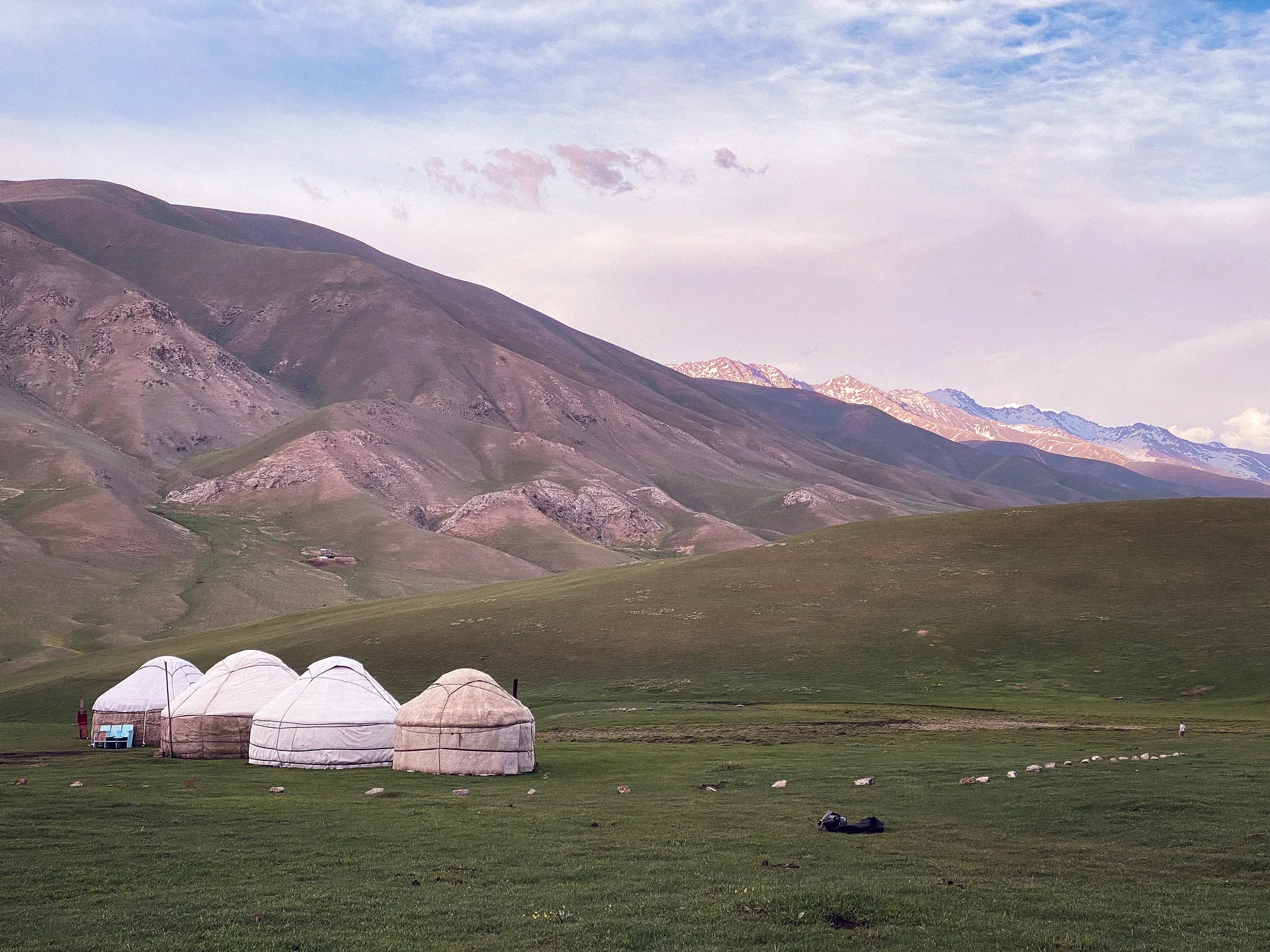
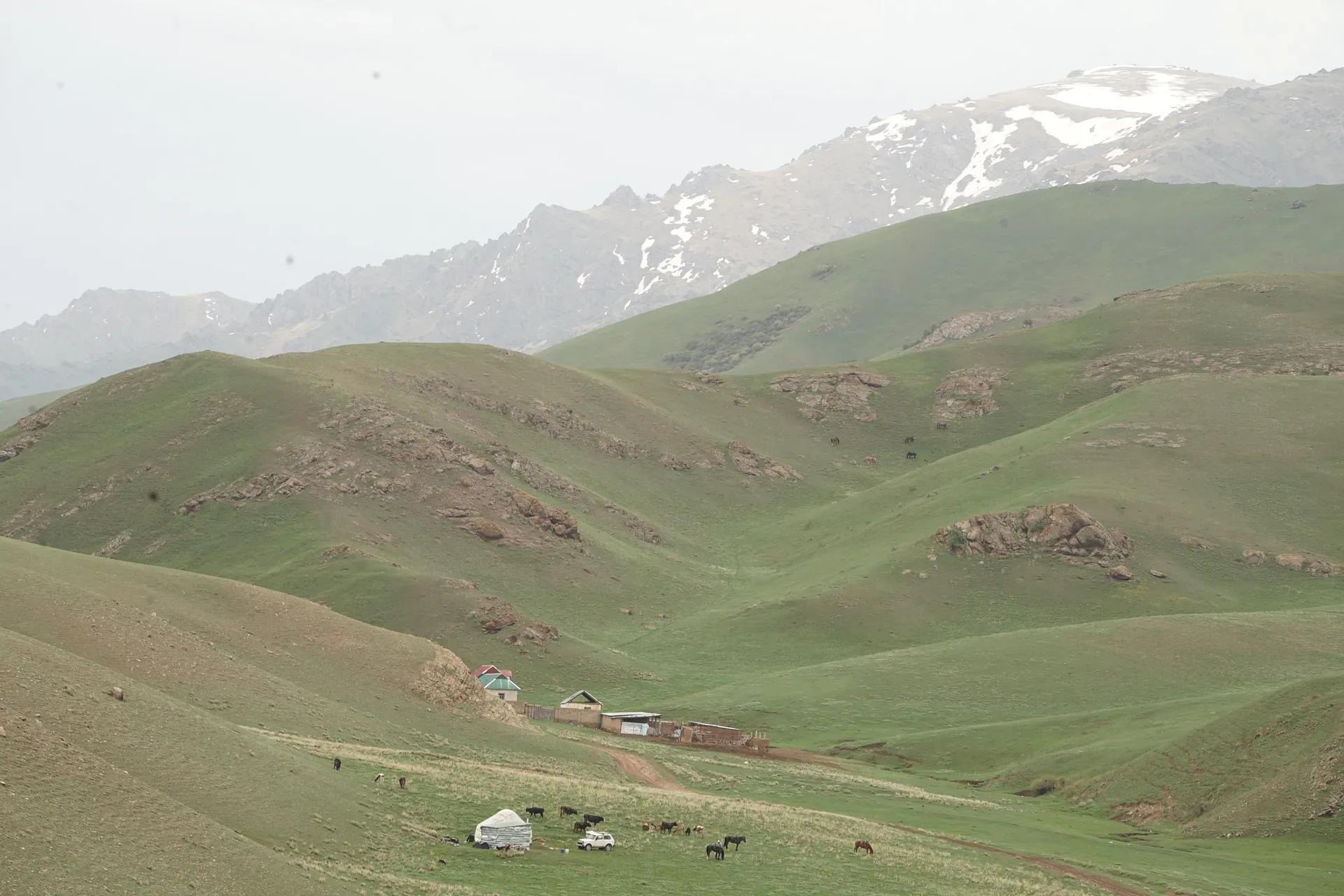
Our plan was to drive 4.5 hours from Bishkek to a village called Kyzart, meet our guide, and start our horse trek into the Tian Shan. We would stay in traditional yurts with nomadic herders, something I’ve always wanted to do, and make our final ascent to the alpine lake of Song Kul.
After the trek, we’d head another 5 hours south to the town of Naryn and spend the night at a hostel. Next, we’d drive off-road deeper into the mountains to guide us through the Kok Kiya valley toward one of Kyrgyzstan’s most stunning remote lakes, Köl-Suu.
We’d need a special border permit to cross a military checkpoint (it’s located near a sensitive border zone near China), a few gallons of extra fuel, and old-school coordinates to guide us. No biggie.
Soon enough, I'd discover that I needn't have worried about that permit...
Driving in Bishkek is a touch above beginner level. I had only just gotten my full license a month prior, and so I happily let Kristi take the wheel in what can only be described as Russian roulette.
“Oh god, Kash, where are the lanes?” she mumbled, half-drowned by the incessant shrill of honking horns and screeching tires. The only thing soothing her anxiety? Taylor Swift, of course.
Turns out, the only thing I needed to do to experience culture shock was to plop myself in the passenger seat of a Toyota, eyes wide at the blur of life unfolding, “Anti-Hero” crackling on the radio. I could’ve saved myself some serious saddle burn.
Genghis Khan statues, hawkers dishing out roadside plov. Overturned transport trucks, twisted carcasses on asphalt. Mosques pressed against Orthodox churches. Wild horses completely unbothered by it all.
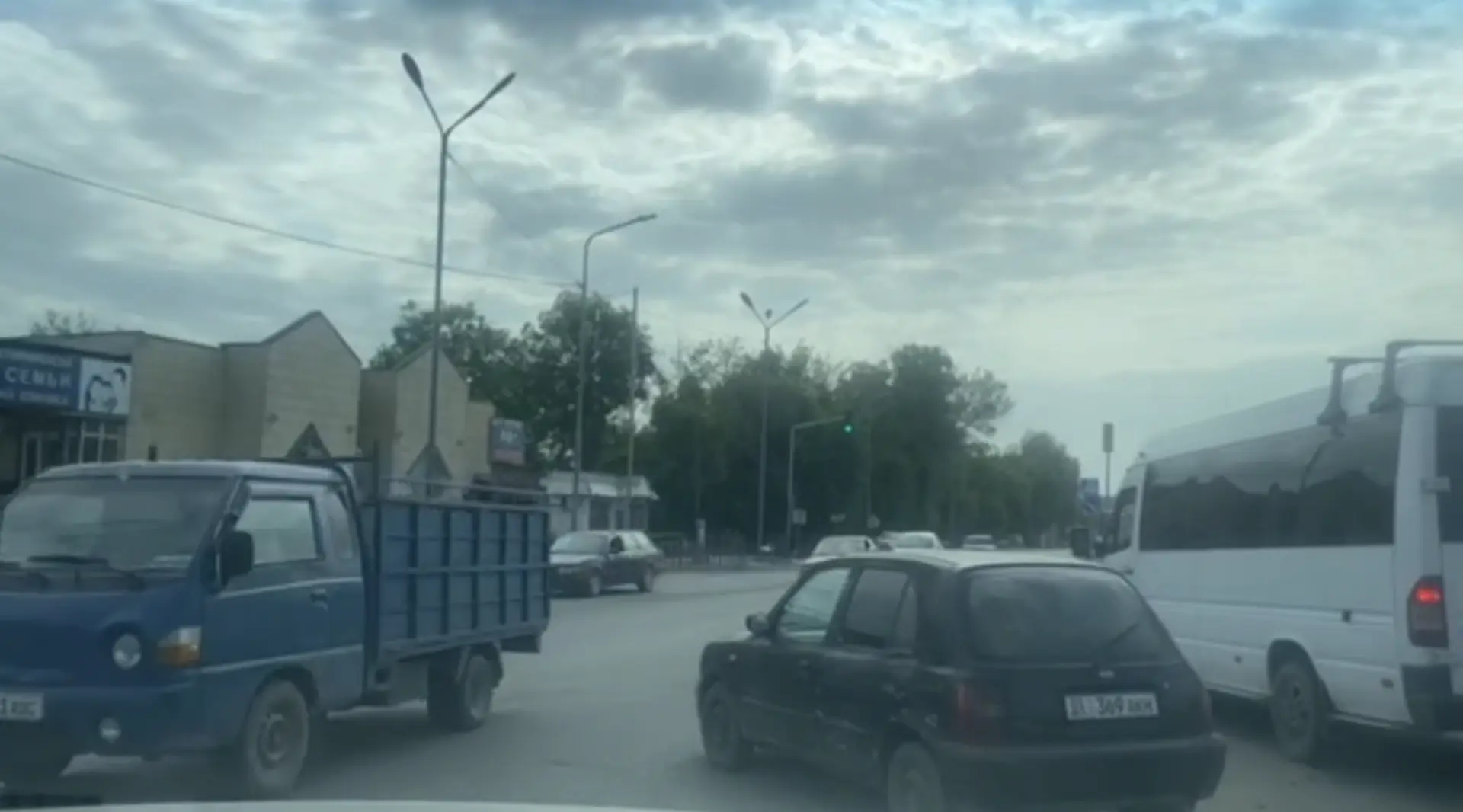
“Arggggh, are we driving on the left or the right? Why are those guys driving on the right?”
“Ummm, maybe it’s both?”
“Woah, are those billboards made from rocks? Cool!”
“Should I go? Do I have time to merge?” “Go, go, go!”
“Wait, is that a baby?”
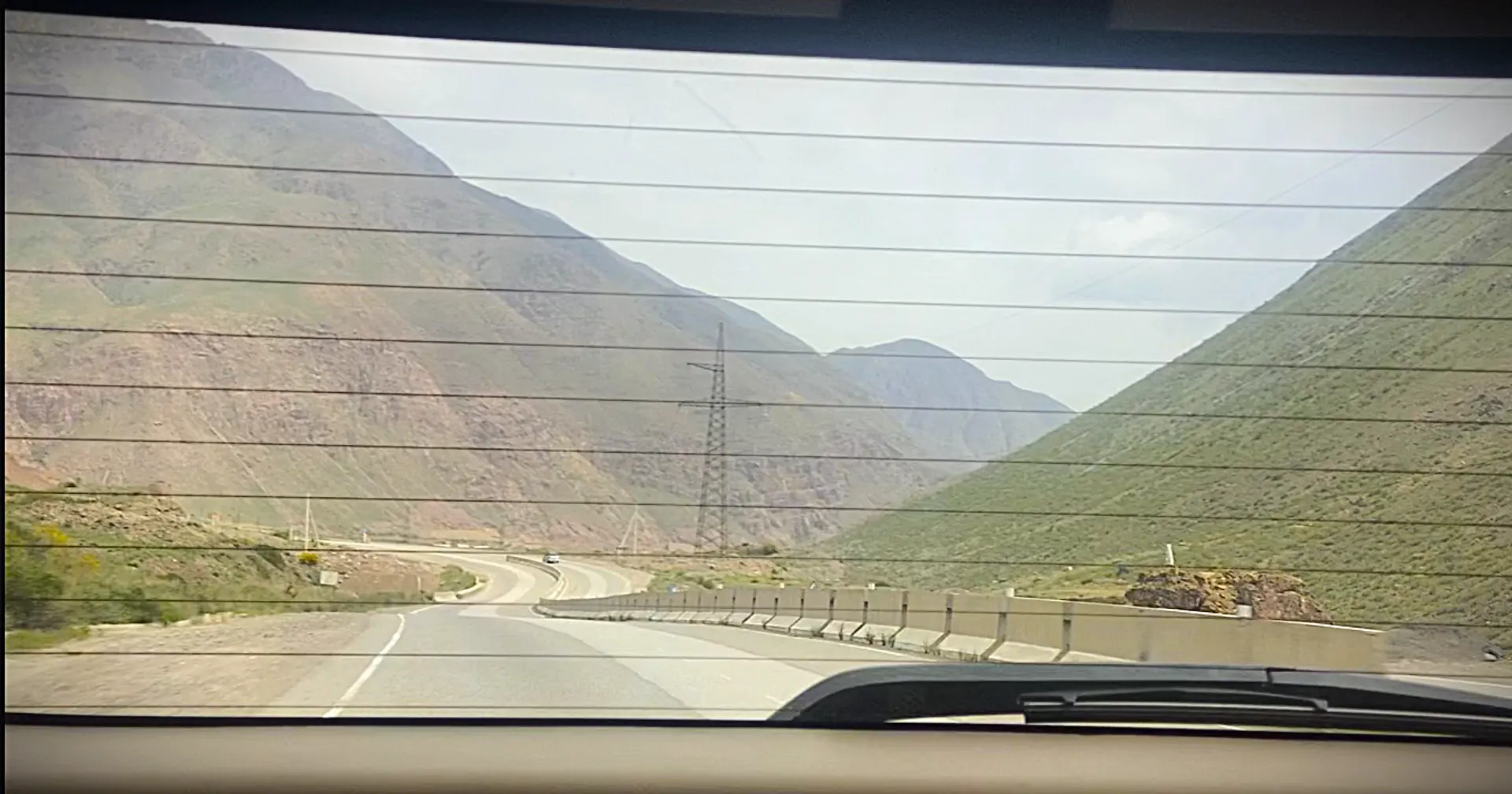
The biggest culture shock, however, wasn’t Bishkek’s vehicular chaos. I had lived in Mexico. I thought I knew things. I had spent two years acclimated to the toilet paper bin. I took whatever the street-food gods threw at me. But nothing, absolutely nothing, prepared me for Kyrgyz toilets.
Allow me to rephrase: Nothing on God’s green earth had prepared me for Kyrgyz ROADSIDE toilets. I won’t go into detail here; some things are better left unspoken. But heed these words of advice: Brace yourself mentally, physically, and spiritually. Don’t breathe. Don’t look down. Remember it’ll be over soon (probably).
And for the love of all things holy, empty your pockets.
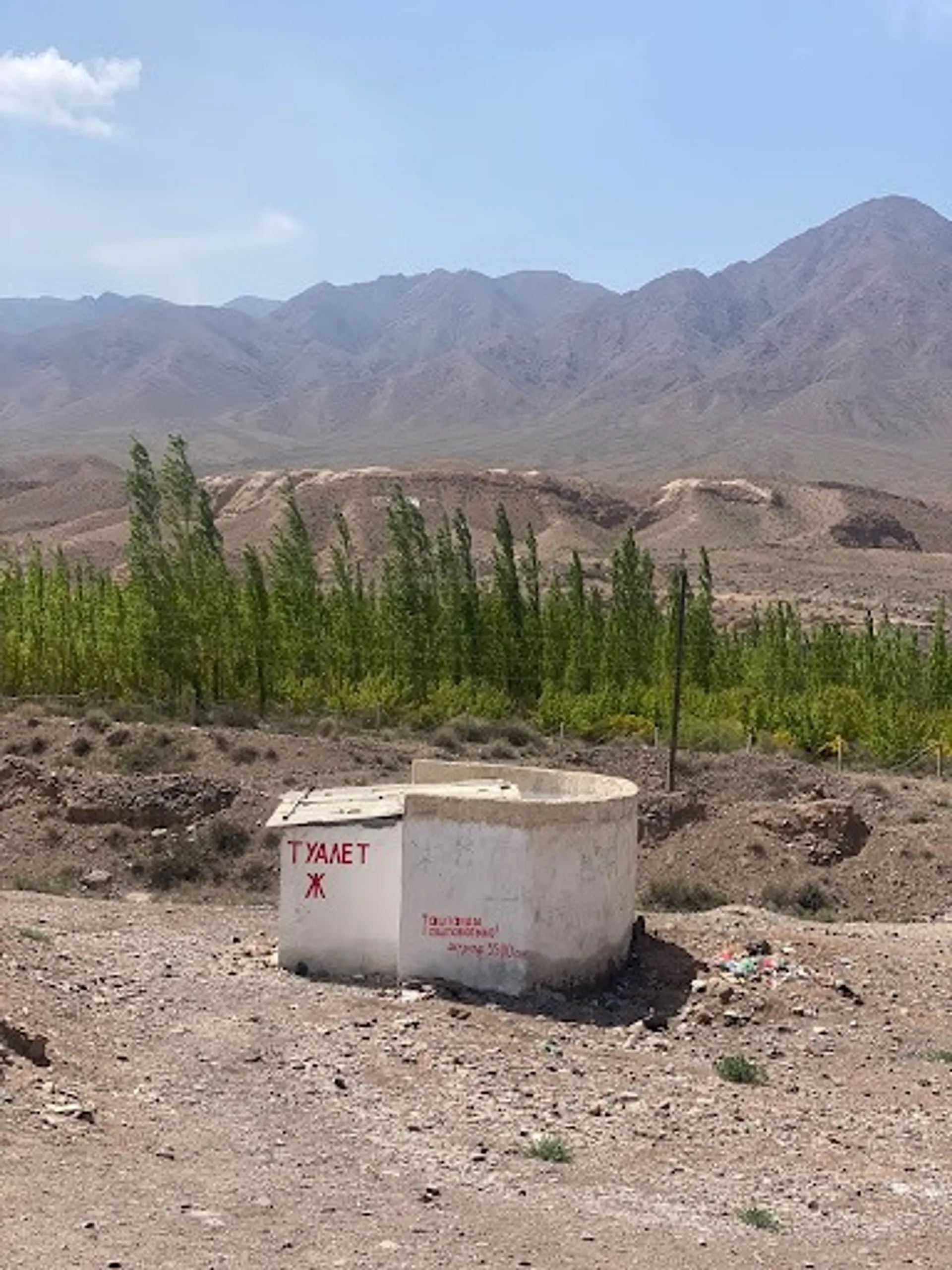
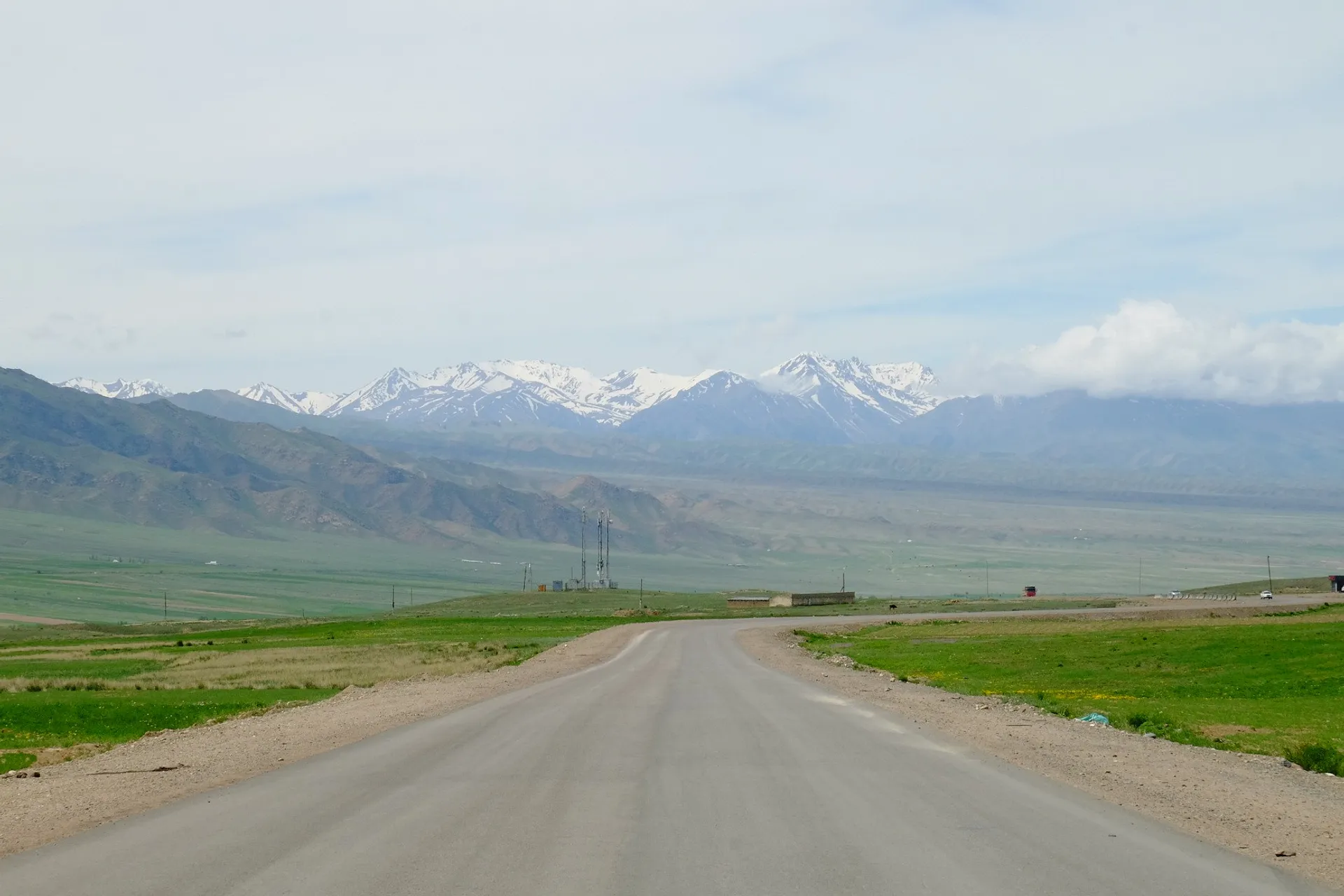
Back en route, the road unwound before us, and we both relaxed into the rhythm of the drive, deliberately turning a blind eye to yet another multi-vehicle pileup.
I couldn't believe I was here. For years I had dragged that little yellow Google Map man over every street imaginable, fascinated by its nomadic culture, one of the last remaining in the world.
The people here have watched empires come and go: Mongol invasions, Chinese dynasties, Russian rule, and Soviet control, and yet their flag still rises. Red, with a sun crossed by forty lines, each one representing a clan fighting quietly to keep their traditions alive. And now, here I was coasting along the Silk Road, feeling like I was sharing a breath with everyone who ever passed this way.
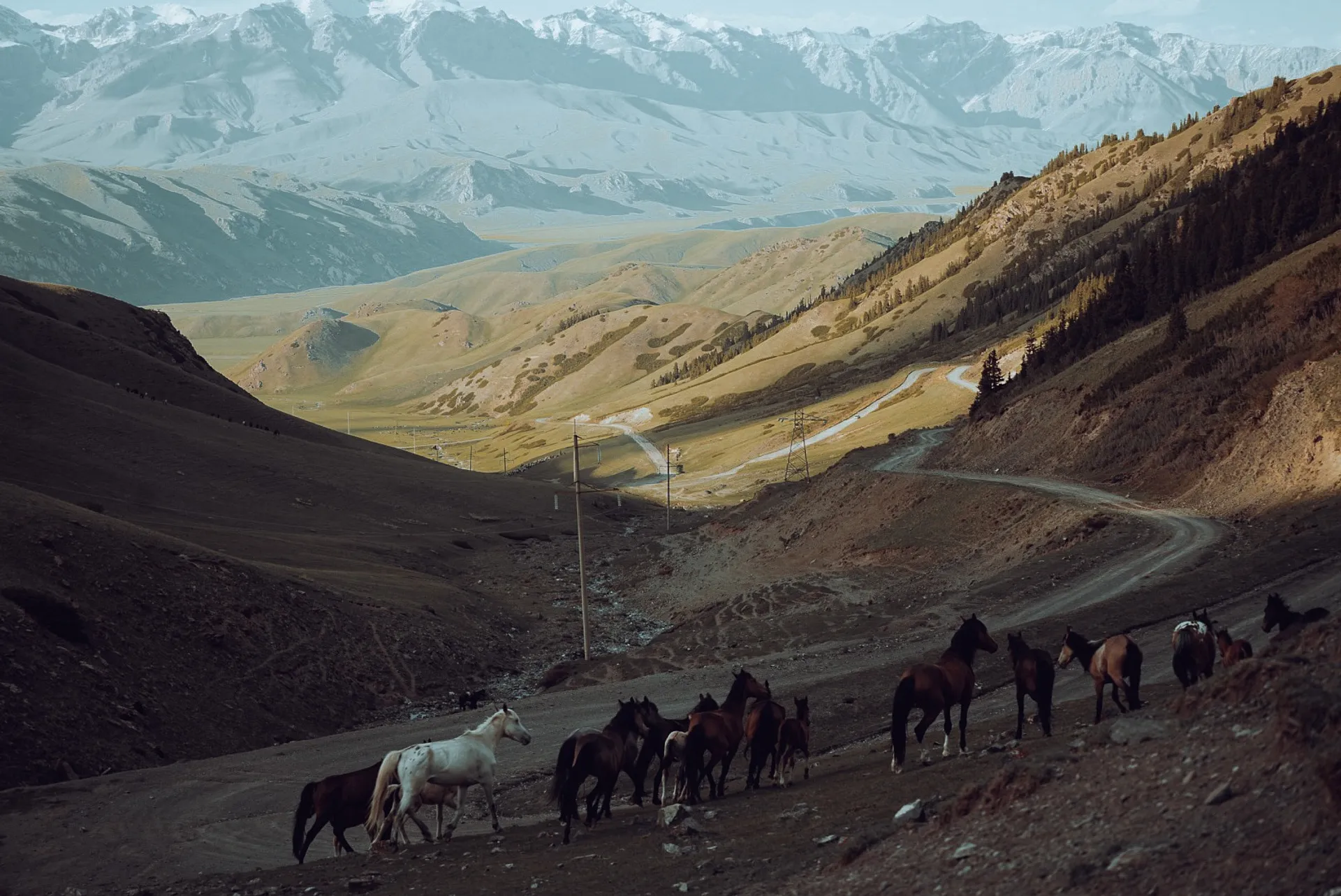
The view shifted like a magic eye poster: shepherds setting up the first yurts of May as wild foals stay close to their mothers, traversing squelchy green steppes and occasionally crossing the highways to reach a stream.
Their numbers appeared to multiply the more our eyes adjusted, moving past the dust of ancient settlements and ruins that speak of a forgotten era.
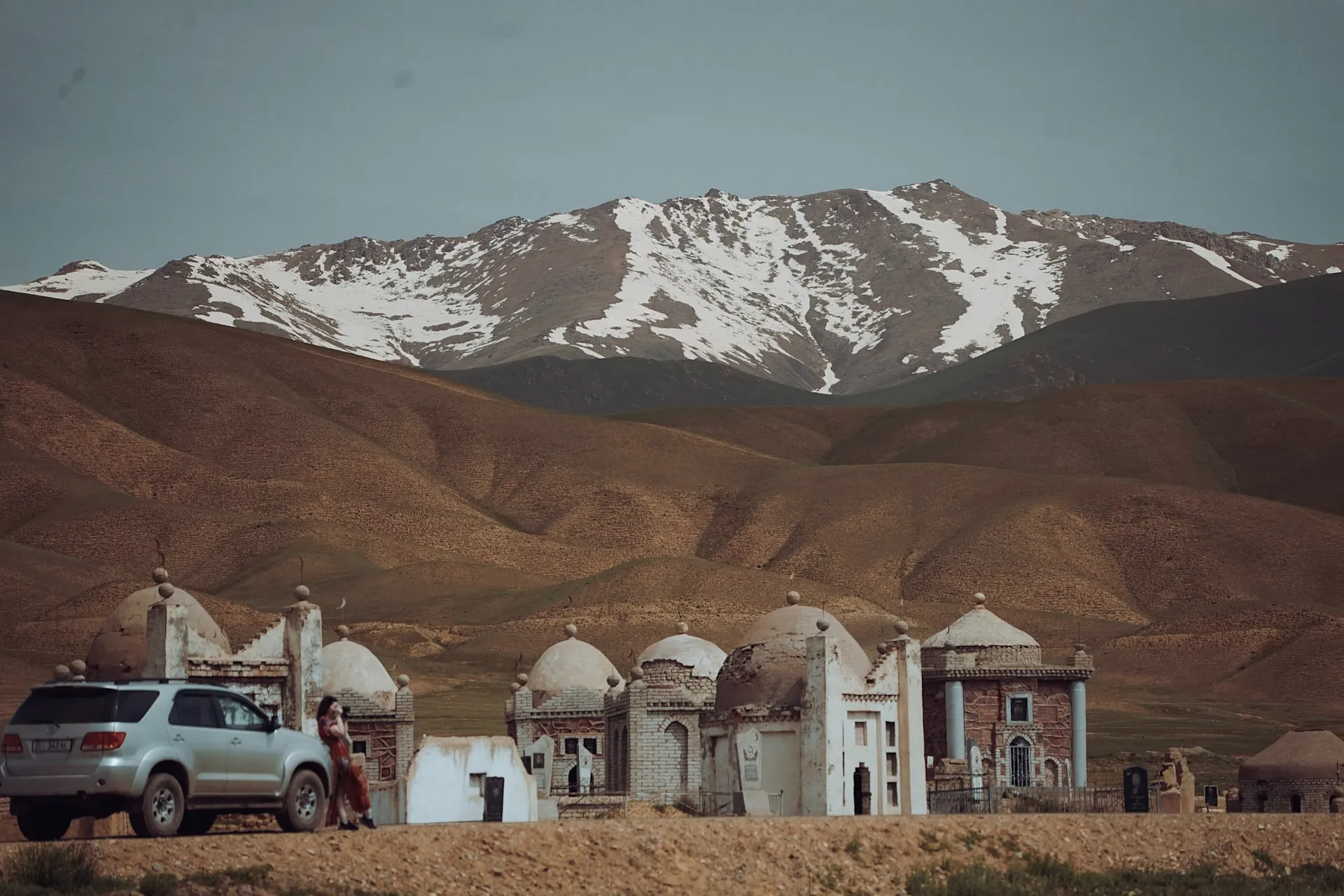
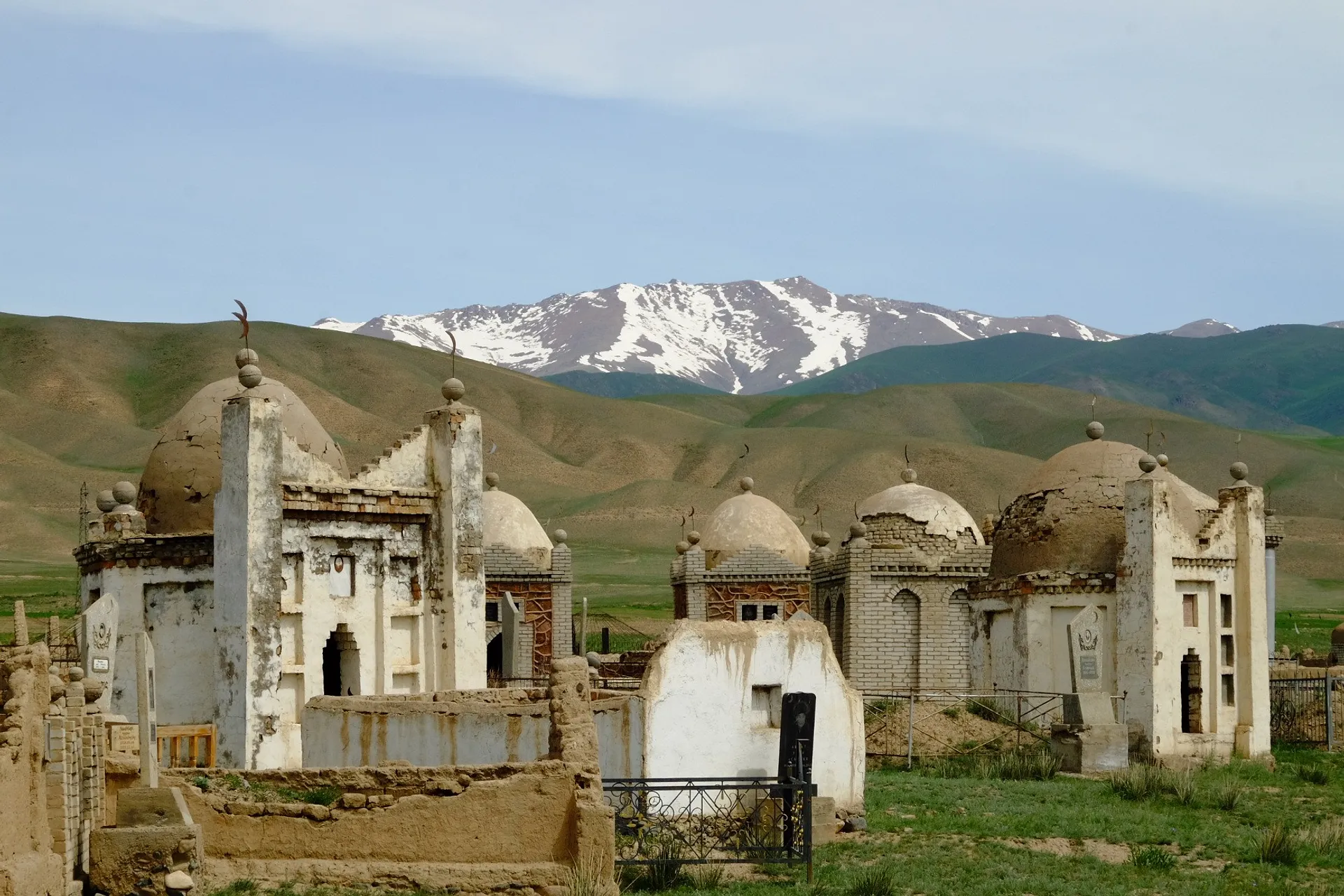
What captivated me the most was the trail of mausoleums leading us deeper into the mountains. Photos of lost loves and eagle feathers adorn ornate, rust-coloured tombs that seemed at odds with the alabaster mountains in the distance.
They reminded me of sandcastles, each plot echoing tales of Islamic faith, Kyrgyz tradition fused with Soviet history. Later on, my guide would tell me that the cemeteries are intentionally placed on hilltops and horse trails across all four corners of the land, “close to the heavens, so they can follow the path of nomads.”
After a few hours and a minor breakdown of our car, we reached Kyzart, the last village before the trek to Song Kul Lake and home to our guide Ryskul.
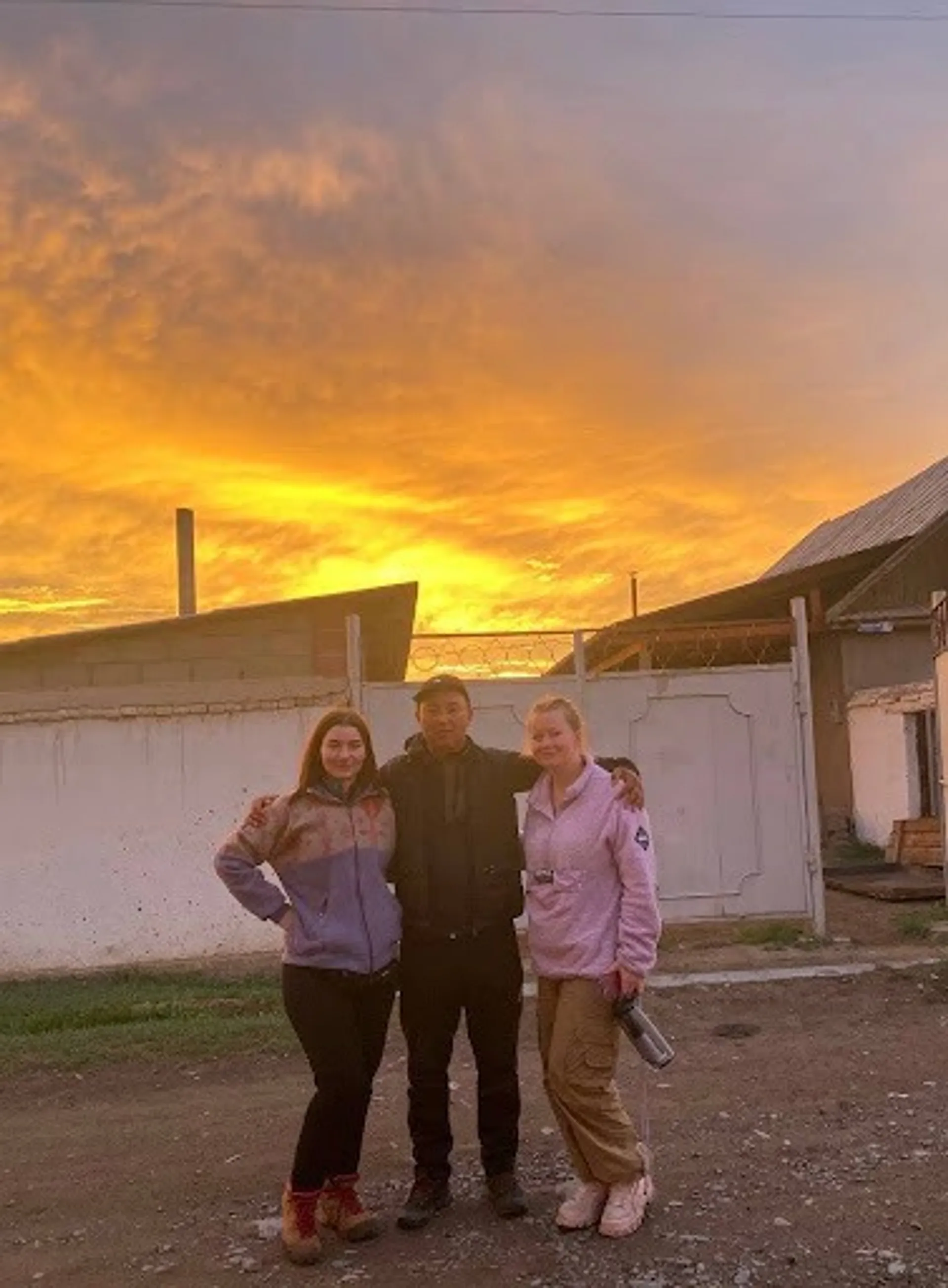
He’d been guiding tours here since he was a teenager and knew the mountains like the back of his hand. The money he earned from guiding treks had allowed him to install a full Western-style bathroom with an electric shower and toilet—a total upgrade from the traditional Kyrgyz setup. He was proud to show us the renovation in progress when we arrived at his home.
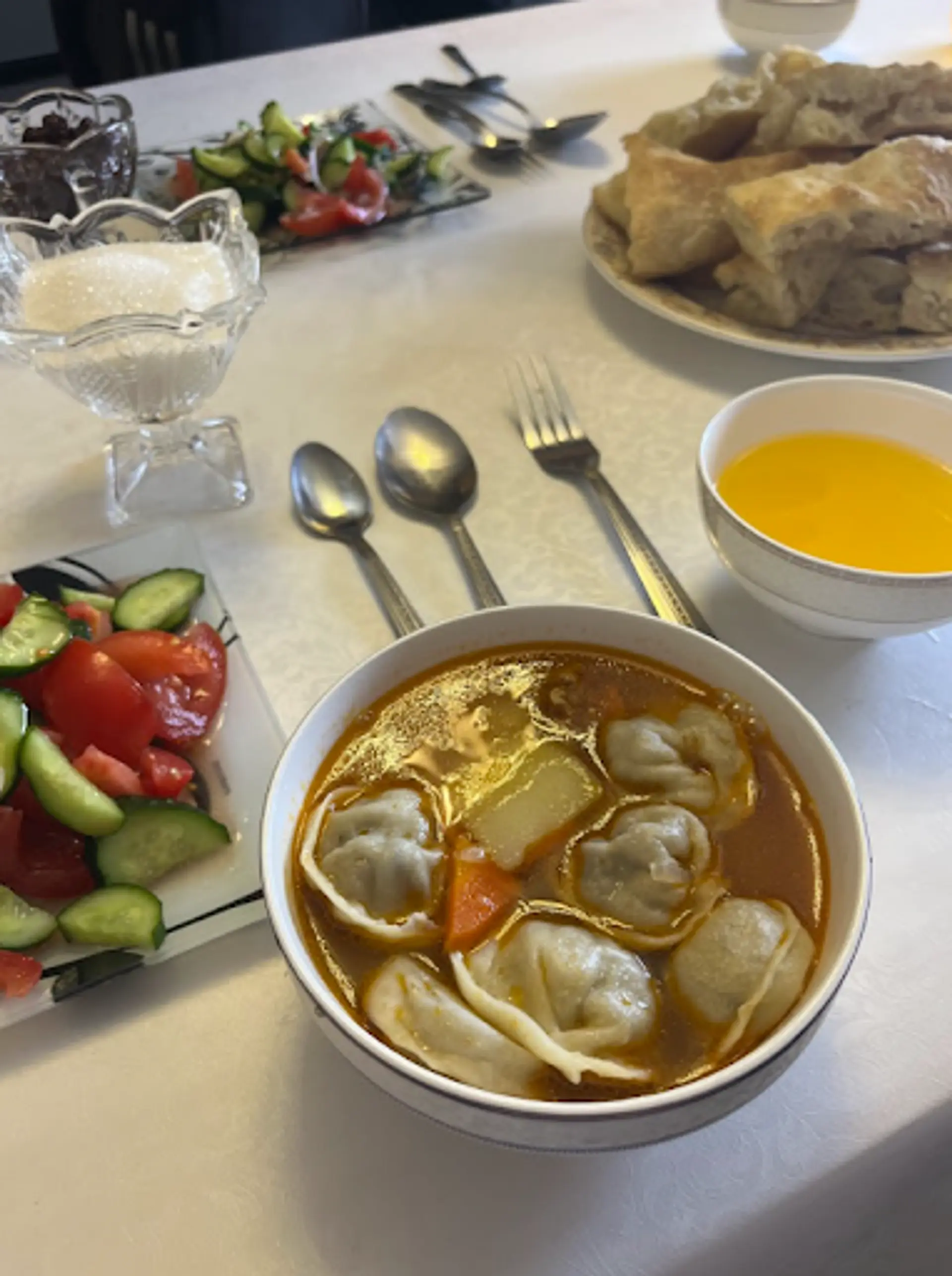
His mother, Roza, served us some of the best bread I’ve ever tasted. The Italians have nothing on her.
“The last time I rode a horse was on my tenth birthday,” I excitedly confessed to Ryskul. His brows twisted, a silent sigh escaping his lips when it dawned on him what the next four days with two clueless white women would entail. He muttered something in Kyrgyz under his breath. I didn’t wait for a translation.
Our next destination, on the other hand, was deserving of translation: the Tian Shan, or “the Celestial Mountains.” A bolt of silk dropped carelessly from the heavens, strewn across the ‘Stans before spilling into China.
Only an hour into the trek, my mind was happily suspended in disbelief. Valleys of jade and clay swept me up into a world of saffron and silk, crescent moons and caravanserais—silent stories carried by the trade winds. I’m telling you, borders can’t contain something this close to magic.
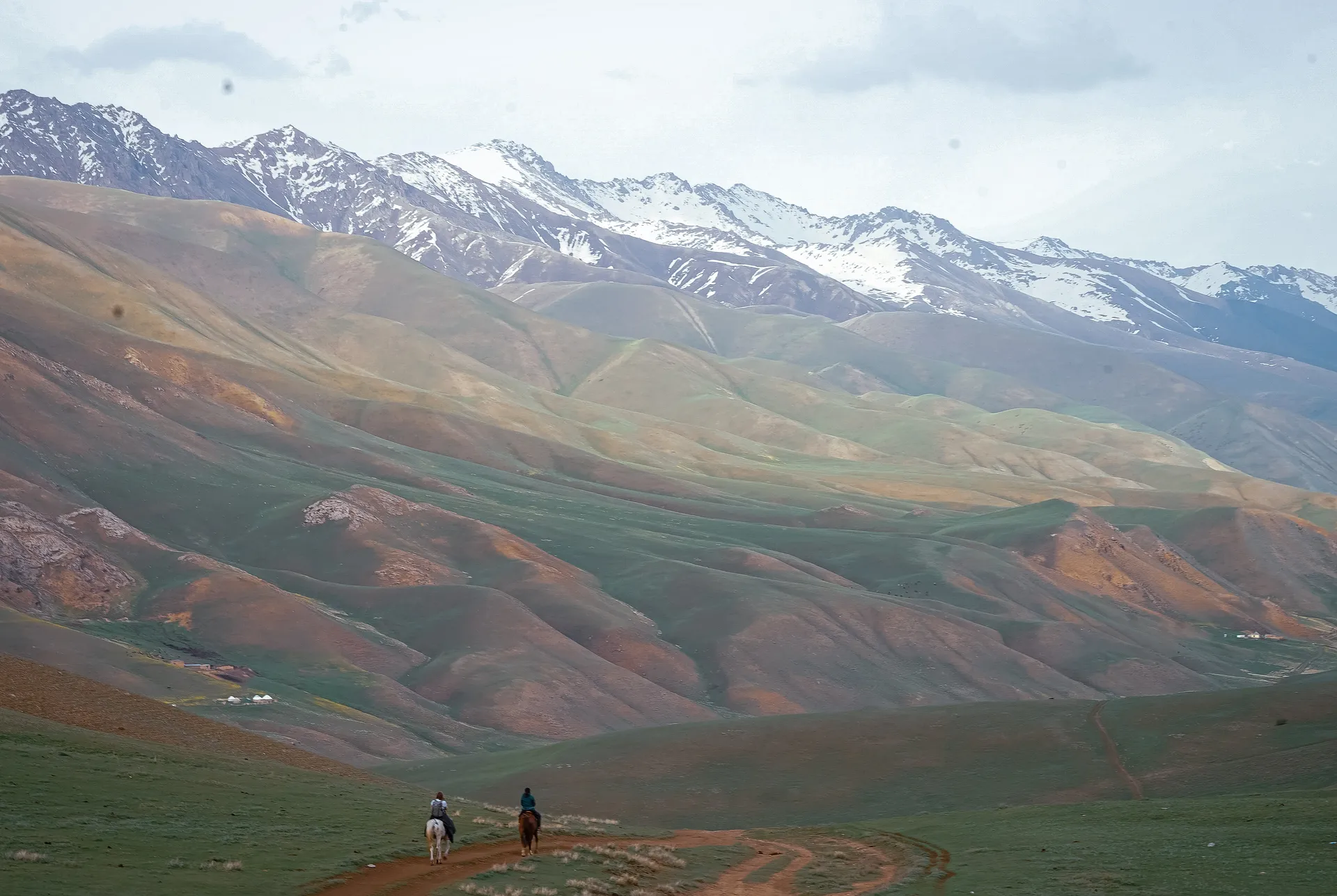
Sensation was the only thing reminding me I still resided on Earth. A dull ache in my back. The creak of the saddle beneath me. The distant rumble of thunder, and a hundred wild horses running in its echo.
Minutes later, bolts of lightning struck behind us in the valley, threatening to turn our peaceful trot into a test of nerve. Ryskul sprinted ahead, beckoning us with a whistle to haul ass.
My horse lunged forward into a gallop, his mane whipping in my face, and I clung for dear life as we outran the storm. I could feel myself tipping, my hiking boots slipping from the stirrups. I cursed myself for not taking Reddit’s advice seriously. “I have no horse-riding experience; how stupid would it be to go on one of those multi-day treks?”
Bracing myself, I squeezed my eyes shut, waiting for the moment I’d be sent tumbling into the valley, whispering silent prayers to every god under the sun. The terrifying plummet never came, and neither did divine intervention, but as I white-knuckled the reins, a jarring "POP" in my spine heralded a revelation: There's a reason why I'm an atheist.
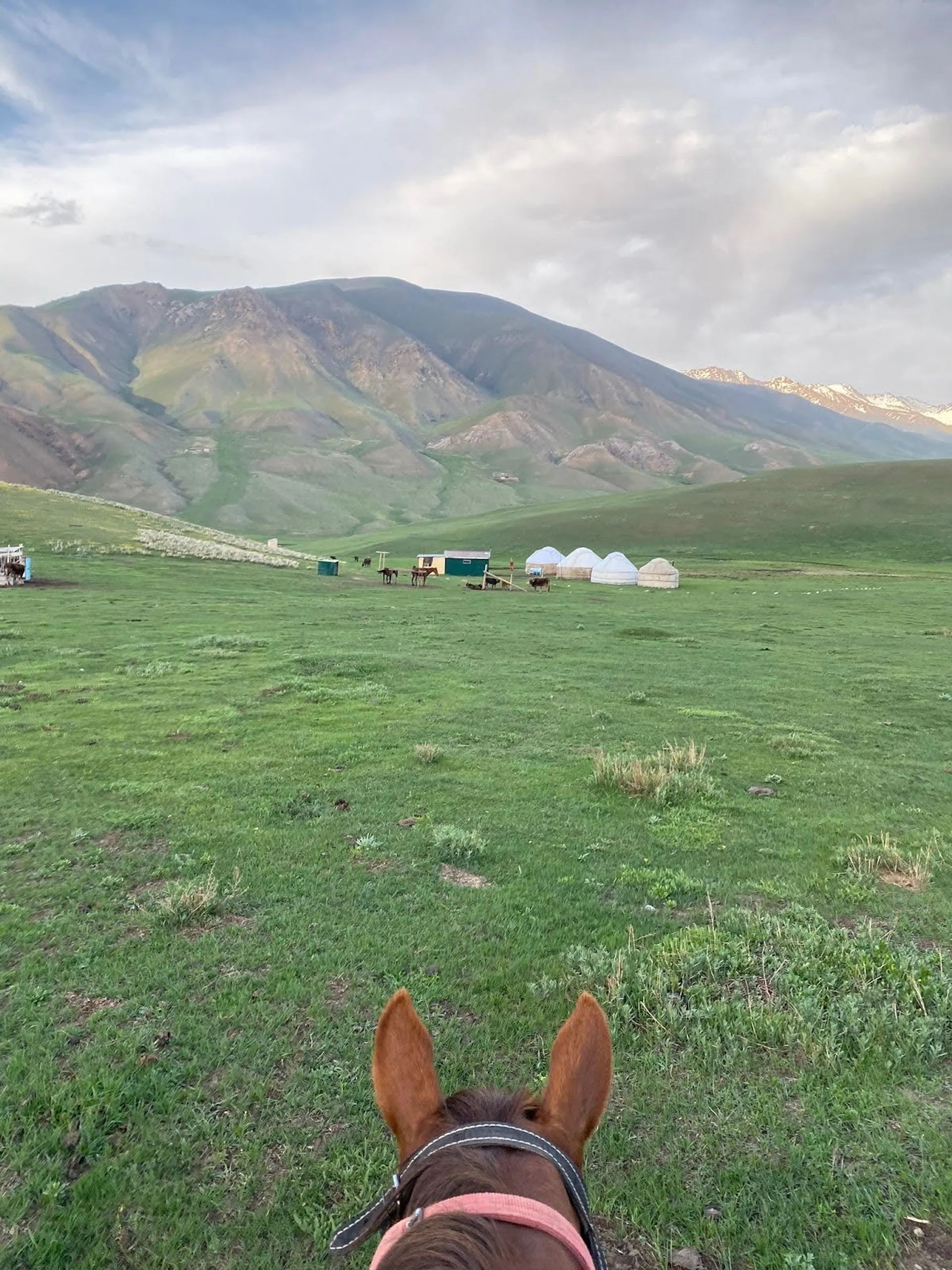
Riding into the first yurt camp was one of many moments that humbled me on the trek in ways I still struggle to put into words.
“Wow,” I whispered to my horse.
The Kyrgyz steppe stretched out before me like an endless emerald ocean rising and falling in the distance. I had never seen anything like it. Never felt so far from home—in the most liberating way.
I have this feeling when I travel, like there’s an invisible thread stretched between me and home. The further I go, the tighter the pull, and I can’t tell if it's going to drag me back or just break.
Here, I would have happily let it break.
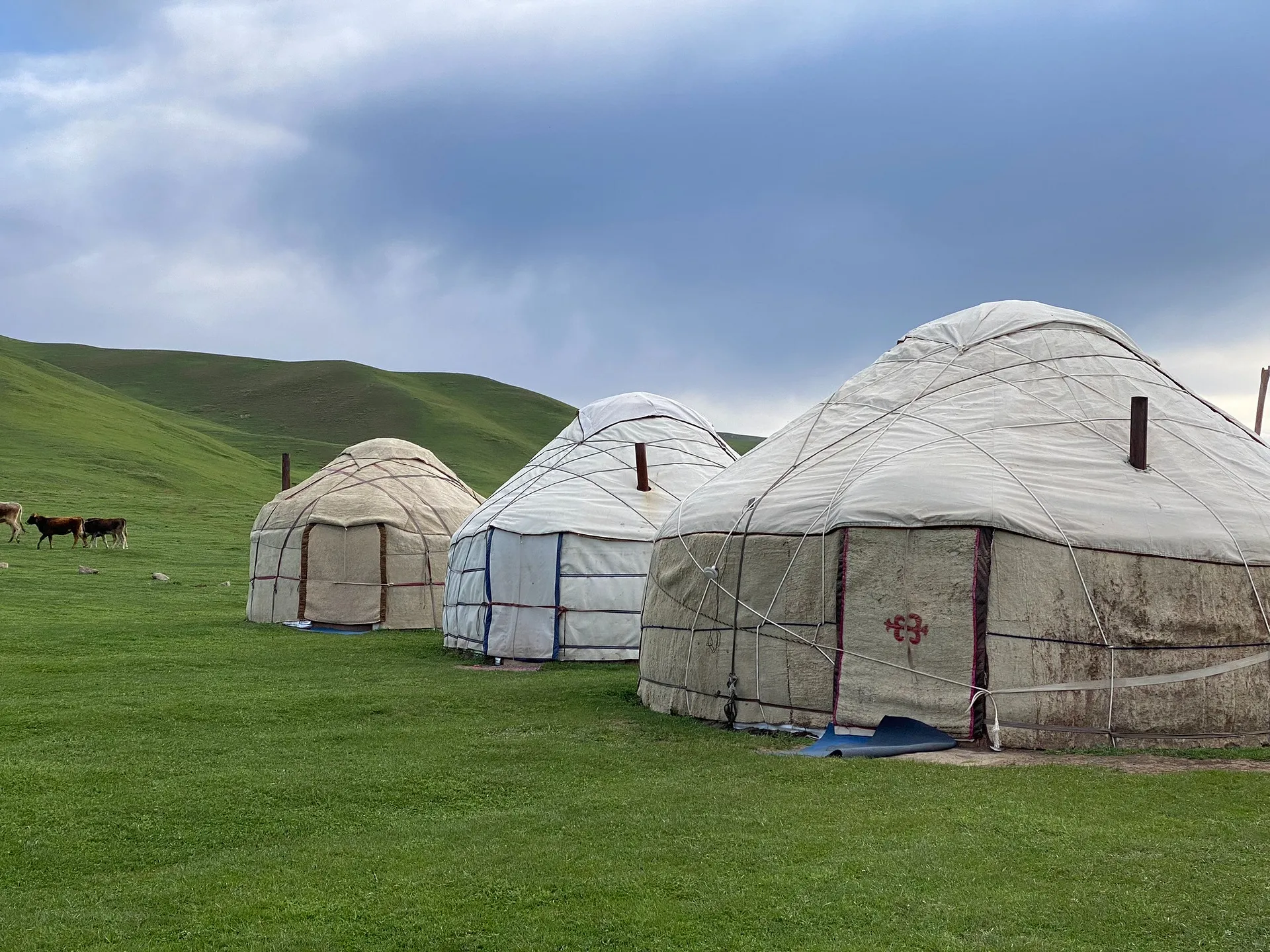
And the yurts! The colour of bone, layers of ancestral felt hugged all sides of the jailoos, cocoons for shepherds against the darkening sky.
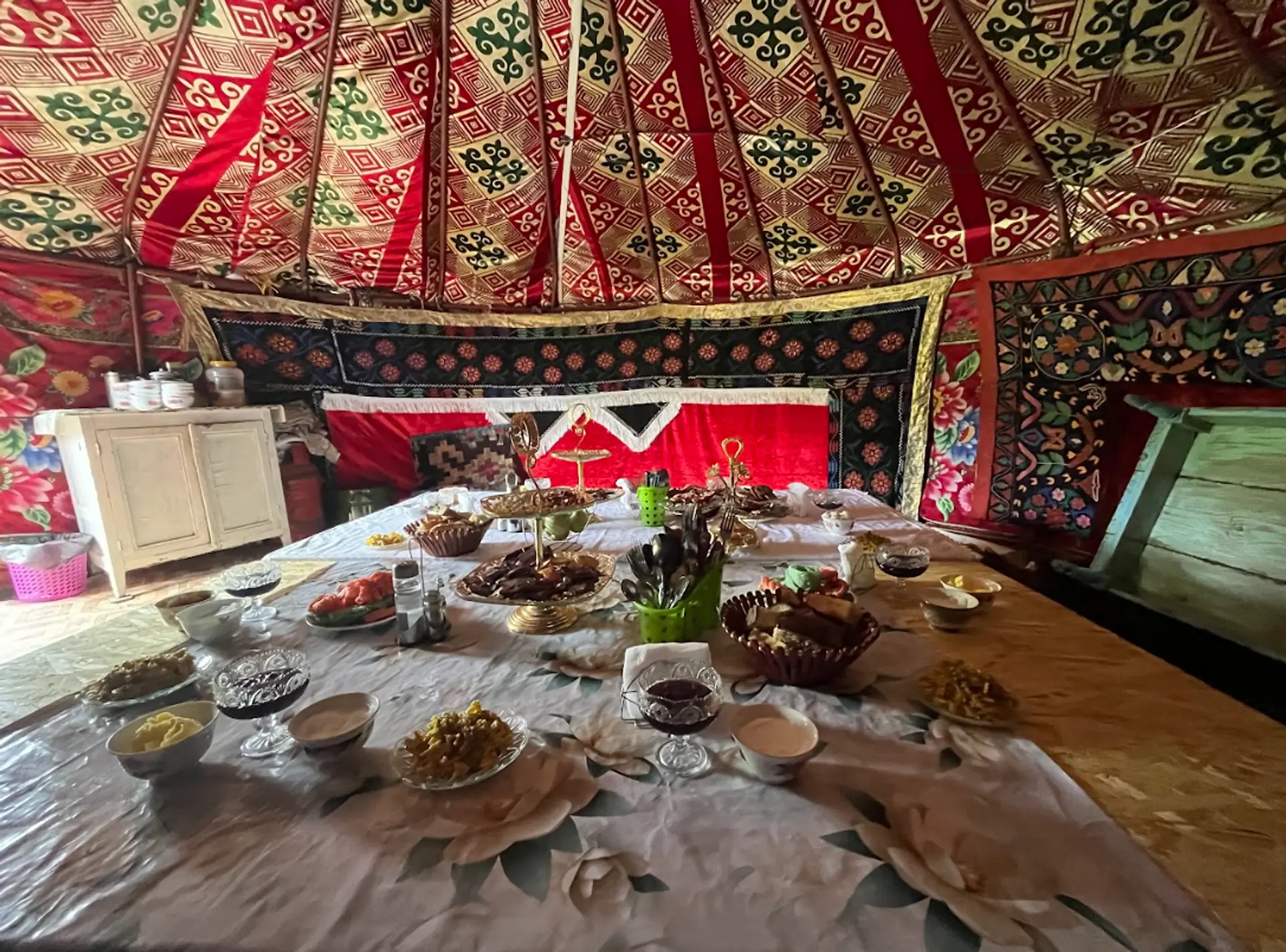
Inside, I was met with a surprising contrast, an explosion of geometric and floral patterns fighting for attention, jolting awake the weary traveler seeking warmth from a crackling stove.
With steaming cups of chai in hand, we sat cross-legged on the floor, the swelling black leaves infusing their power into our aching glutes. Ryskul stifled a laugh beside me. A shepherd, undeterred by his audience of foreigners who didn’t speak a word of Kyrgyz, was making a spirited case for Islamic conversion to anyone who happened to wander into his yurt. Today that was us.
A low, intricately carved wooden table snaked around our feet, groaning under the weight of what seemed to be a month's worth of groceries, a testament to the generosity of our hosts. Pots of homemade jam in every conceivable berry, bowls of fluffy white rice, and hearty stews brimming with potatoes and horse meat—something I'd usually think twice about tasting.
But taste I did; slurping down the broth, I kept my eyes fixed on the towering dessert stands stacked high with pastries and sweet bread. I tried not to dwell on the thought that I might be eating a creature that could have led other travelers to this very door. Horse meat is a staple here, but declining a meal would be seen as insulting to the cook.
People here have relied on horses for everything for centuries, so it makes sense that the tradition made its way onto the table too. “Horses are a man’s wings.” So goes the Kyrgyz proverb. From statues to sports, stamps to soups. To understand the Kyrgyz people is to understand the deep, spiritual bond between man and mare.
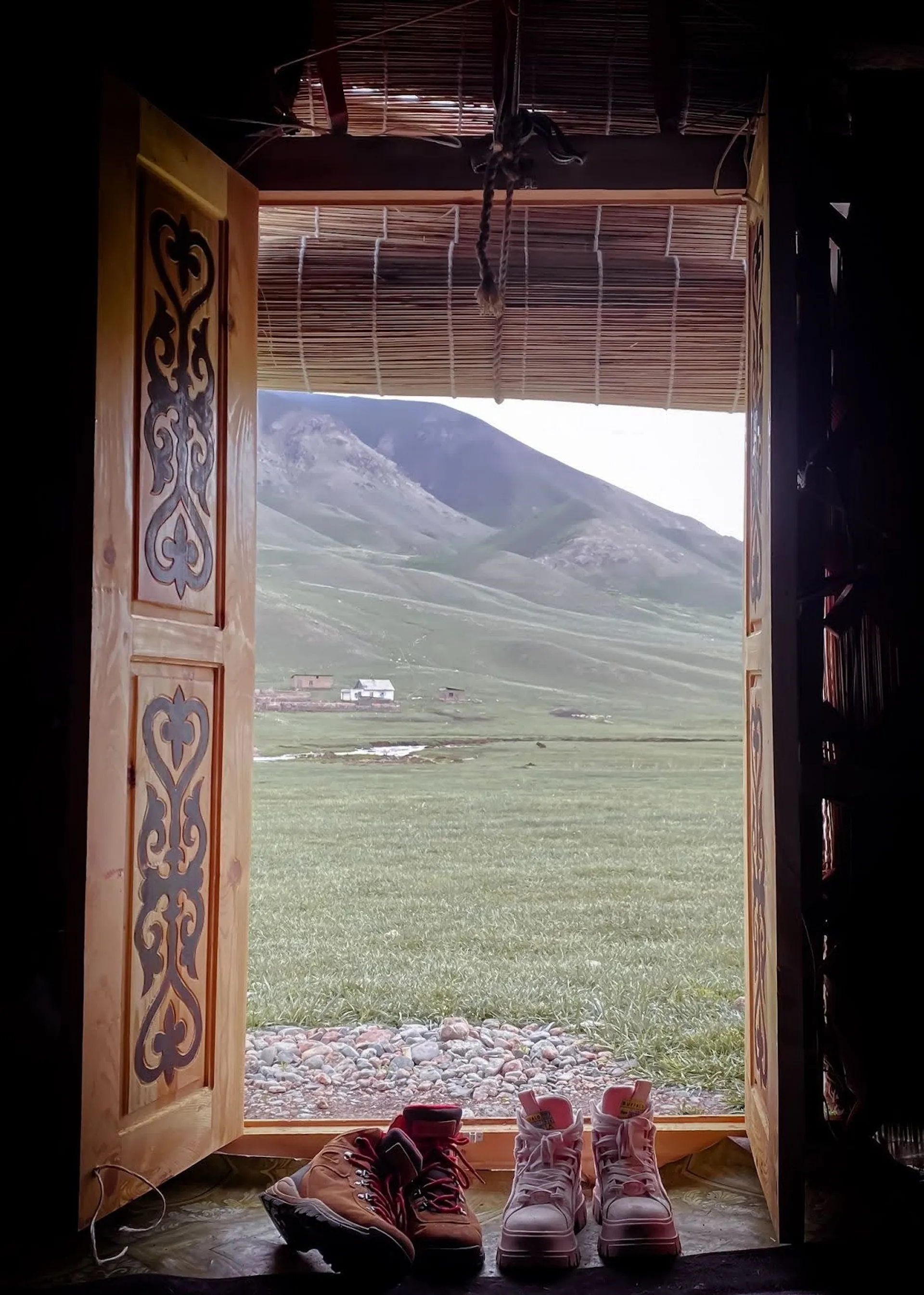
We woke early the next morning, ready for day 2 of our trek. Peeling back the makeshift bamboo door of my yurt, my boots were greeted by the slick sweetness of dewdrops, horses grazing in the grass nearby.
It was all but silent except for the deliberate brush-brush-swish of a traveler using a bottle as a makeshift sink to brush their teeth. A sound that, in my many years on the road, has always said “Screw your corporate cubicles and your 401k, I’m out here living.”
Saddling up, Kristi and I made quite the pair; between us, we must’ve had at least 6 layers of clothing on our bottom halves. Me with my padded cycling shorts underneath my leggings and waterproof trousers (earning me a high five from a German trekker who had the same wave of brilliance) and she with her waterproof detachable riding skirt. The circumference of an Edwardian kirtle, it swallowed her and half of the horse.
The Kyrgyz had never seen anything like it, trailing their hands along the warm fleece underside. A helper at the camp pursed his lips together, giving a single nod, the universal sign for “not bad.”
As I wrung out my leggings from yesterday’s trek, it was clear Kristi had won that philosophical packing debate.
We rode 5 hours that day, and not for a minute did the rain relent as we ascended 3,228 meters to the Tuz-Ashuu Pass.
The valley surged with sleet and fog, the path ahead completely dissolving the higher we climbed. I no longer trusted I was part of a group; it was just me and an eerie mist swirling around my grunting horse. His hooves came into contact with an impassable trail of pure, treacherous ice, and we sickeningly skidded sideways down the mountain.
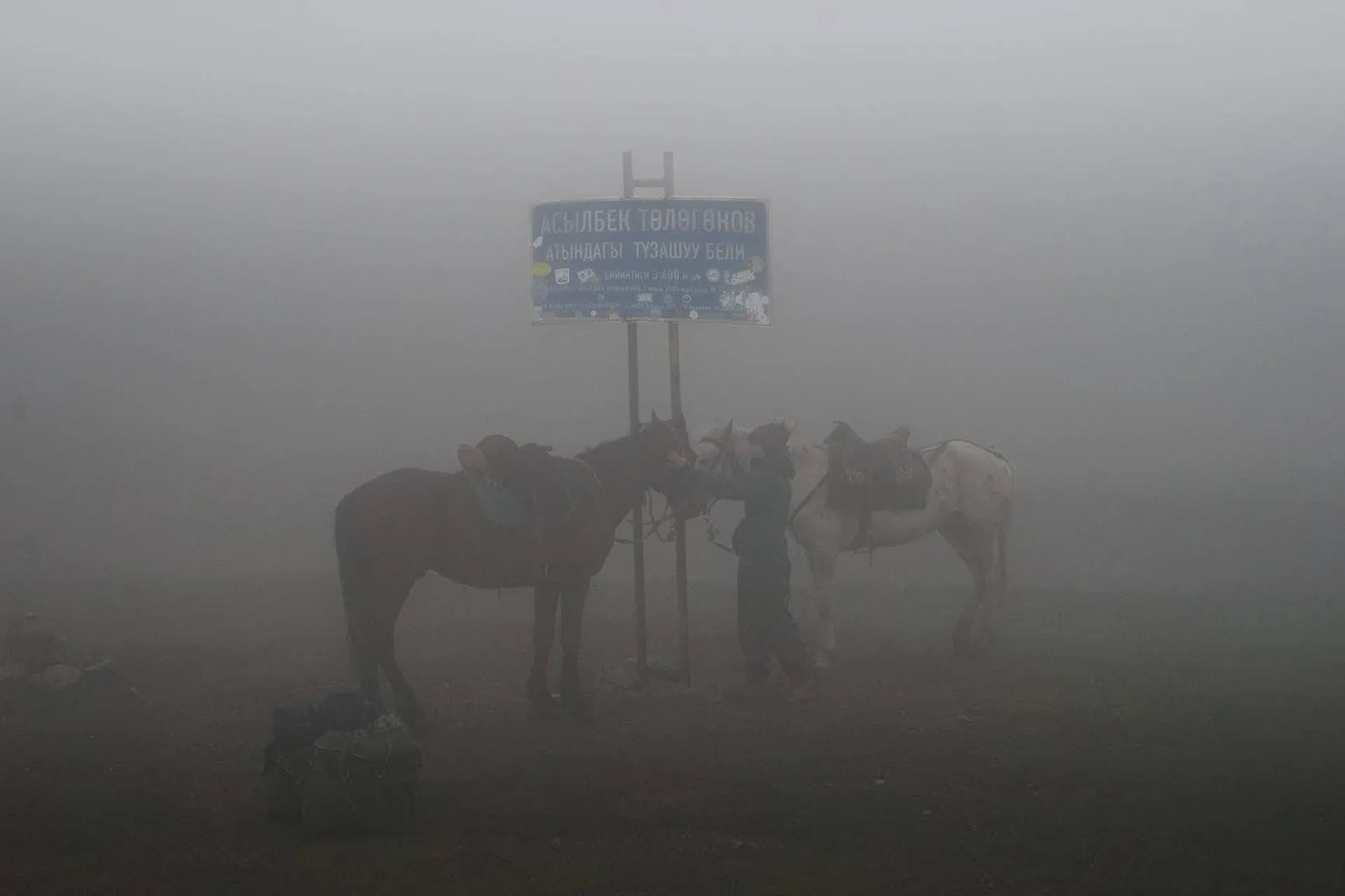
"Woaaaaah," Ryskul’s disembodied voice called out from the abyss, "No, no, no, stop, stop, you go dowwwwwn…"
Had he called out a second later, we would've plummeted off the ridge.
That's the thing about fog: it erases everything you think you know is there. By the time we reached the top, I couldn’t feel my fingers anymore. The rain had needled them past pain and straight into a dull, clumsy numbness, and the ache in my back had started to spread upwards in a slow, cold creep. Finally, we reached the top of the pass for a quick break.
As Ryskul disappeared to find any bit of cell service, Kristi and I huddled underneath her rain skirt, rubbing our hands together vigorously to regain feeling.
My spine was threatening to snap into shards of ice. “I’m not sure if I can keep riding,” I whispered quietly, mostly to my horse.
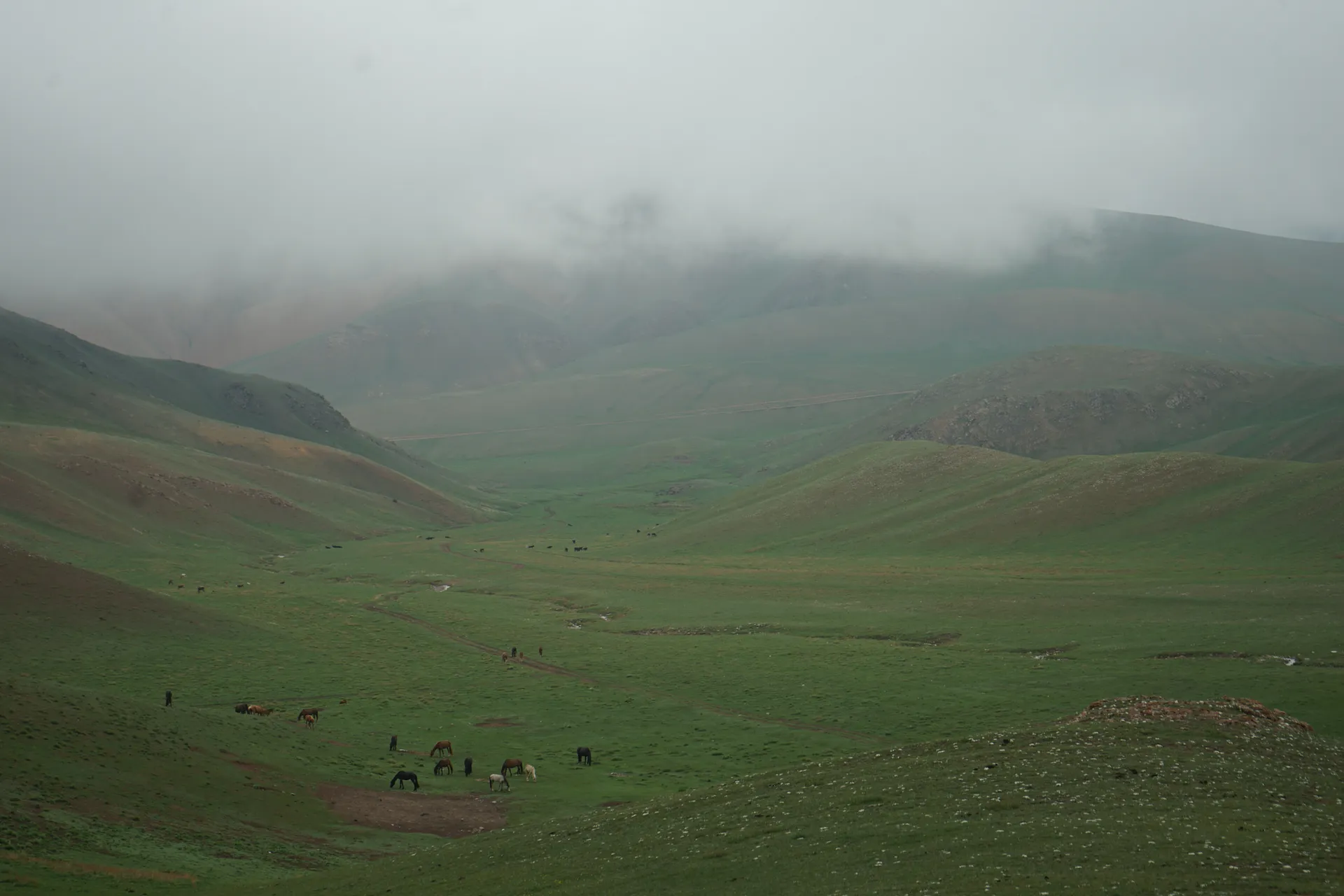
But we continued on, for what felt like an eternity, through endless sucking squelchy marshes, every once in a while stepping through a curious mound of blackened bones and matted, half-scorched fur. I could make out a few sheep skulls and vertebrae, cracked and calcined, and remnants of felt or blankets fused to the bones by an intense and deliberate fire.
A cemetery of winter, each of these mounds marked a campsite where the jut—killing cold—won. Where a family had to burn what they couldn’t save: animals lost to storms, and perhaps felt walls that sheltered them, all confined to the same purifying fire to spare the living livestock pasture from disease. We passed by quietly; the weight of the place settling solemnly into my bones.
Ahead, across the last span of open steppe, the yurts of the camp stood like a small cluster of pearls. And beyond them, a band of silver at the edge of the world, the slate-grey eye of Song Kul.
This was the picture I had come for. But as we rode the final stretch to the camp, the distance to the lake itself seemed to warp and stretch, not shrink; it was a blurry, indifferent dream.
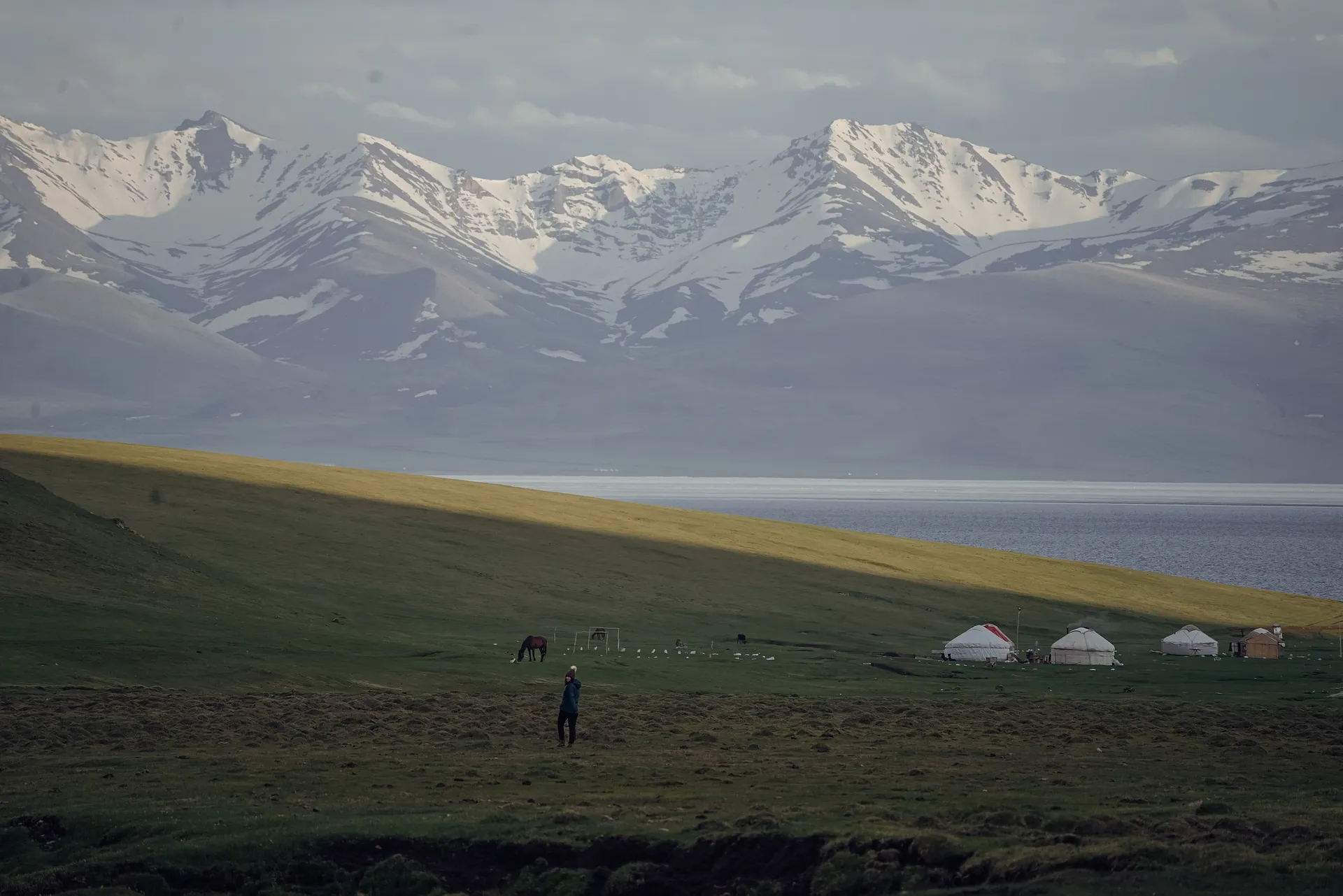
As I struggled down from my horse, Ryskul caught my eye. Not with a smile, but with a long, assessing look. He saw the sweat beading on my cheeks, the unsteadiness of my stance, and the fever burning like a low, sinister inferno behind my eyes. I grasped the barrel of my horse for balance.
He said nothing. He didn’t have to. His silence was the clearest translation of all. We were two days from Kyzart. Two days from anything resembling help. And the real journey, the one I hadn’t packed for, was about to begin.